Posts

Cosmic Microwave Background Radiation
Image
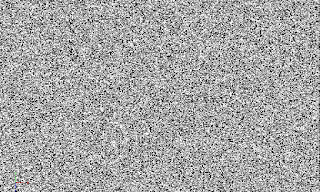
When I was younger, in order to receive and interpret radio wave signals as pictorial and audient information analogue television required tuning in. My grandad tried to explain to me that the static fuzz of black and white pixels was an untuned television trying to interpret the universes oldest radiation. I was too young at the time to understand what he meant. Now I have come to appreciate this as the cosmic microwave background radiation (CMBR): The CMBR data interpreted as a universal heat map in the sky What it is it? Predicted to exist in the 1940’s and discovered in the 1960’s, the CMBR is currently the oldest existing radiation in our universe, it is everywhere. The radiation waves are millimetres in length and thus relatively long in the electromagnetic spectrum, they cannot be seen to the naked eye. The image you see above was recorded by the Planck telescope and the associated data was released in 2006. Careful analysis was required in order to remove other wavelengths of ...
Gravity: Reloaded

Image
In the film ‘The Matrix: Reloaded’ The protagonist Neo meets the matrix creator the architect, the matrix is a simulation designed to enslave the human race. Within this scene the room is surrounded by many TV screens in which the architect is quietly observing and calculating. Each screen shows a different perturbation of the matrix, with each perturbation depending ultimately on the freedom of choice. Indeed, it is shockingly revealed to Neo that the matrix is not only an enslaving simulation, but it is also infinite and iterative: Portion of the infamous scene from 'The Matrix: Reloaded'. In my opening post entitled ‘Gravity’ I discussed two possible methods of unifying quantum mechanics with general relativity, thus solving for a theory of everything, these are called string theory and loop quantum gravity. Whilst they are still highly theoretical, they are also extremely imaginative. As a result, they have significant cosmological consequences: Cosmological predictions ...

Cosmological Chess

Image
In game one of the 2016 World Chess Championship held in New York, USA, defending champion Magnus Carlsen with the white pieces played an unusual ‘Trompowski’ opening against the challenger Sergey Karjakin.  Whilst throughout the entire game Magnus had the better chances, Sergey defended well and the game ended in a draw .  Chess is all about balance and philosophy. Usually at high level matches with perfect play, games end in theoretical draws with white maintaining a tiny advantage and black defending solidly throughout. What makes chess fascinating is conscience decision. Players under pressure occasionally make mistakes or valiant sacrifices creating game changing imbalances. The 'Trompowski' opening, an unusual position in elite chess, but nevertheless reasonably understood in book theory. What does this have to do with cosmology? Well, one could a liken the universe as a sort of chess match, one between gravity and dark energy. These forces permeate the entirety of...

Einstein

Image
Albert Einstein was a pioneering physicist who arguably gave classical mechanics the face lift it desperately needed at the turn of the 20 th century. He provided us with the elegant theories of relativity describing gravitational fields of large objects, as well as the wave-particle duality nature of small objects such as photons which exhibit the wave like properties of light: Einstein's work involved his relativity theories on gravitational fields of large objects such as stars, as well as the wave-particle like properties of light . Einstein spent his remaining time searching for a theory which reconciles relativity with quantum mechanics, thus providing a complete description of the universe, which to this day remains an unsolved problem in frontier physical cosmology. I covered this problem in my previous entry entitled ‘ Gravity ’, indeed we have some exciting and imaginative ideas which provide theoretical solutions, but lack experimental evidence.   Also, in his l...

Gravity

Image
Our current understanding of the physical nature of the universe can be accurately described by two mathematical constructs, quantum mechanics and general relativity. Quantum mechanics describes the behaviour of small objects such as particles (small fundamental building blocks) using statistics. General relativity describes the behaviour of large objects such as planetary bodies using empirical observation. Whilst both constructs are extremely accurate and have large amounts of experimental evidence, problems occur when one tries to unite these theories given their different mathematical constructs. If these theories could be united the properties of blackholes and the beginning of the universe can be described, both of which posses large and small characteristics such as a singularity (an infinitely small point) and a vast size making them telescopically observable. The problem lies with gravity. Quantum mechanics predicts the existence of a graviton (a particle of gravity)...